
Table of Contents
The landscape of store brands has shifted, with private labels now seen as equal to national brands. This shift has opened up new opportunities for packaging partners across the board.
Higher-income households are increasingly embracing private labels, leading to a rise in unit sales for store brands while national brand sales decline. Additionally, a majority of Gen Z consumers believe that private label products are on par with branded items.
“Being price savvy is now a point of pride,” remarked Lisa Peteet, creative director and co-founder of Atlas Branding, emphasizing that younger consumers have embraced private label but still value good design.
By the numbers
23.5%
Private brand unit share in the U.S. in 2025, a record high according to the Private Label Manufacturers Association
+0.2%
Private brand unit sales growth in the U.S. through September 2026
-0.8%
National brand unit sales decline in the U.S. through September 2026
This shift has prompted retailers to differentiate their store brands, with Aldi, Amazon Grocery, and Walmart all revamping their private label packaging in the past year. They are now treating private labels more like individual brands rather than just a department within the company, as noted by Eran Mizrahi, founder and CEO of Source86.
As private labels continue to grow, it’s creating opportunities for packaging suppliers to engage with this evolving segment. This trend is also pushing national brands and their suppliers to enhance their packaging to convey premium value.
“Packaging is where a retailer brand showcases to shoppers what it stands for,” explained Peggy Davies, president of the Private Label Manufacturers Association. “On the shelf, it is the product’s most immediate opportunity to make its case.”
Private label builds an identity
Mizrahi highlights Trader Joe’s as a retailer that has successfully built a brand around value through its store labels. At Trader Joe’s, 82% of unit sales come from store brands — the highest among all retailers, according to Numerator.
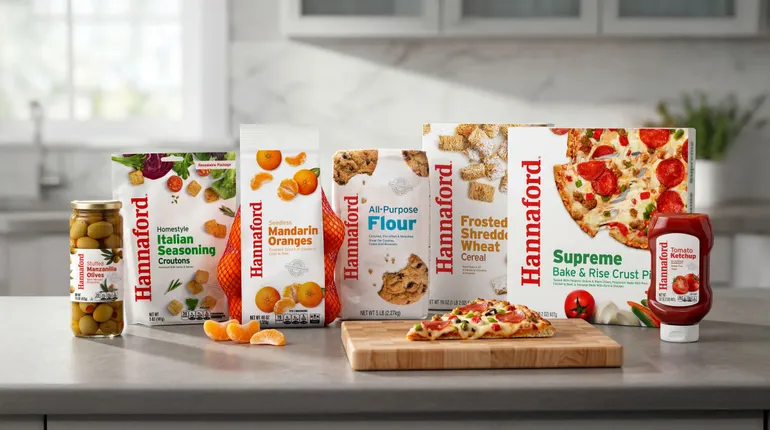
One notable change in private label packaging is the increased prominence of the retailer’s logo, as noted by Peteet. Retailers now want their logos to be more prominent on packaging, while product images take a back seat. This represents a significant shift in the industry.
Private labels can distinguish themselves on shelves through vibrant colors, legible fonts, and clear messaging, as stated by Michelle Leong, a partner at consultancy Simon-Kucher specializing in consumer goods and retail. Designs also need to translate well online for e-commerce, with consistent branding across physical and digital packaging, Leong added.
Retailers leverage store brand packaging to demonstrate an understanding of their customers’ preferences. For instance, Trader Joe’s uses playful copy and hand-drawn graphics to connect with its customers, while Aldi and Walmart cater to budget-conscious shoppers. Sprouts Farmers Market focuses on organic ingredients, reflected in their clean aesthetic and stylized green leaf logo, signaling to customers, “We know who you are.”
Private labels are now exploring limited-edition products and trendy flavors, moving away from offering only traditional options, according to Mizrahi. This shift presents opportunities for packaging manufacturers to supply materials for short-run or specialty SKUs.
Retailers are also considering eco-friendly practices like lightweighting packaging, using monomaterial designs, incorporating more recycled content, and transitioning to paper-based alternatives for their private labels, mentioned Davies. However, if a sustainable redesign leads to a higher price point, brands are less likely to implement it, Peteet noted.
Packaging private labels
For packaging companies looking to tap into the private label market, Davies emphasizes the importance of viewing it as a means of brand building, rather than just providing containers.
Conversely, packaging firms working with national brands may need to focus on packaging that communicates premium value, Davies suggested.
It’s crucial for packaging partners to avoid imitating designs of national brands, though this is becoming less of an issue as private labels carve out their own identities.
In a notable legal battle last year, J.M. Smucker filed a lawsuit against Trader Joe’s, alleging similarities in the packaging of Uncrustables. A federal judge ruled in favor of the lawsuit‘s progression. Previously, Mondelēz International had sued Aldi over packaging similarities with Oreo and Chips Ahoy! brands.
When undertaking redesigns, Atlas employs Google reverse searches to ensure originality in packaging design, Peteet mentioned.
Packaging partners should offer quick turnaround times and adaptable operations to keep pace with retailers’ private label developments, Davies recommended.
Retailers heavily focused on private labels, such as Aldi and Costco, can swiftly bring products to market and remove them just as swiftly if they don’t perform well, as noted by Mizrahi. Product launches are accelerating as retailers enhance their in-house capabilities, prompting national brands to stay competitive and avoid falling behind in their categories.
Mizrahi foresees continued growth in the private label sector, driven by evolving consumer habits and increased investments in store brands by retailers.
“This trend is definitely making national brands more apprehensive,” Mizrahi concluded.