
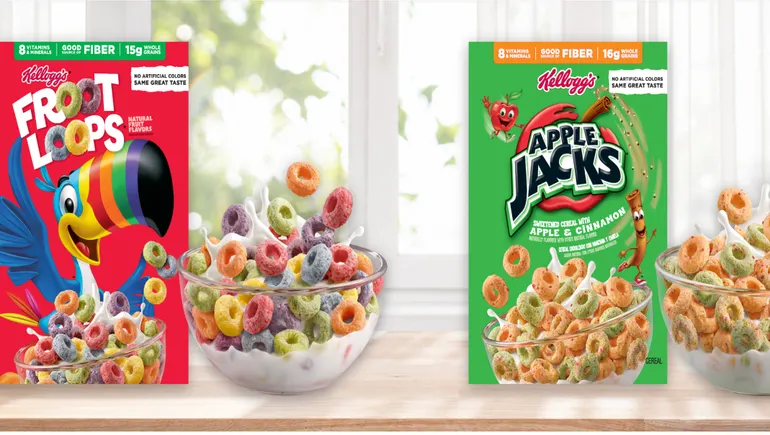
WK Kellogg is set to completely eliminate artificial colors from Froot Loops and other cereals ahead of schedule, aiming to breathe new life into a category that has faced challenges in recent years.
The company had already removed synthetic colors from most of its cereals but still had some in Froot Loops, Apple Jacks, and a few limited-time offerings, making up about 15% of Kellogg’s product lineup. Last year, the Michigan-based company committed to removing these controversial ingredients by the end of 2027.
Kellogg will now transition to using six colors sourced from fruit and vegetable juices and other plant-based ingredients. For instance, turmeric will provide the yellow color, while annatto will be used for orange. Numerous alternative ingredients were tested before finalizing the new recipes.
Production of cereals featuring the new natural colors will begin in the coming months, with shipments to retailers expected by the end of the year.
Doug VanDeVelde, Kellogg’s chief growth officer, described the shift to natural colors as a complex and demanding process that involved extensive work across development, manufacturing, and resourcing.
Ensuring an adequate supply of each natural color while maintaining the same visual appeal, taste, texture, and aroma that consumers expect from their cereals was a key focus for Kellogg. Extensive testing was conducted among various consumer groups to ensure that the new products met consumer expectations.
Kellogg’s competitor General Mills, the leading cereal producer in the U.S., also announced plans to remove artificial colors from its U.S. retail portfolio by the end of 2027. General Mills had previously attempted to eliminate artificial colors from Trix in 2016 but reintroduced synthetic colors due to consumer dissatisfaction with the altered appearance.
Transitioning to natural colors presents unique challenges compared to artificial dyes. Unlike synthetic ingredients, natural colors often require refrigeration, leading to significant investments in Kellogg’s manufacturing facilities to support the transition.
The declining sales of cereals in recent years reflect a shift in consumer preferences towards convenience and fresher, healthier options. Kellogg has been actively promoting the nutritional benefits of its cereals, including highlighting protein and fiber content on packaging.
VanDeVelde anticipates that the move away from artificial colors will create a positive perception around cereals, allowing consumers to enjoy their favorite breakfast option with confidence.
Kellogg has faced criticism from advocates urging food companies to eliminate synthetic dyes from their products. In response to pressure, Kellogg reaffirmed its commitment to removing artificial colors and signed a legal agreement with the Texas attorney general’s office to complete the transition by the end of 2027.
The company’s efforts to remove artificial colors have garnered attention from various stakeholders, including Health and Human Services Secretary Robert Kennedy Jr., who has been vocal about the presence of synthetic dyes in certain products.
Kellogg’s engagement with the FDA throughout the process of removing artificial colors reflects a collaborative approach to meeting regulatory standards and consumer expectations.
Industry-wide initiatives to phase out synthetic dyes face challenges, particularly in sectors heavily reliant on artificial colors like beverages and confectionery. Supply chain issues and cost implications may hinder a swift transition to natural colors, as highlighted in a report from the National Confectionery Association.