
Table of Contents
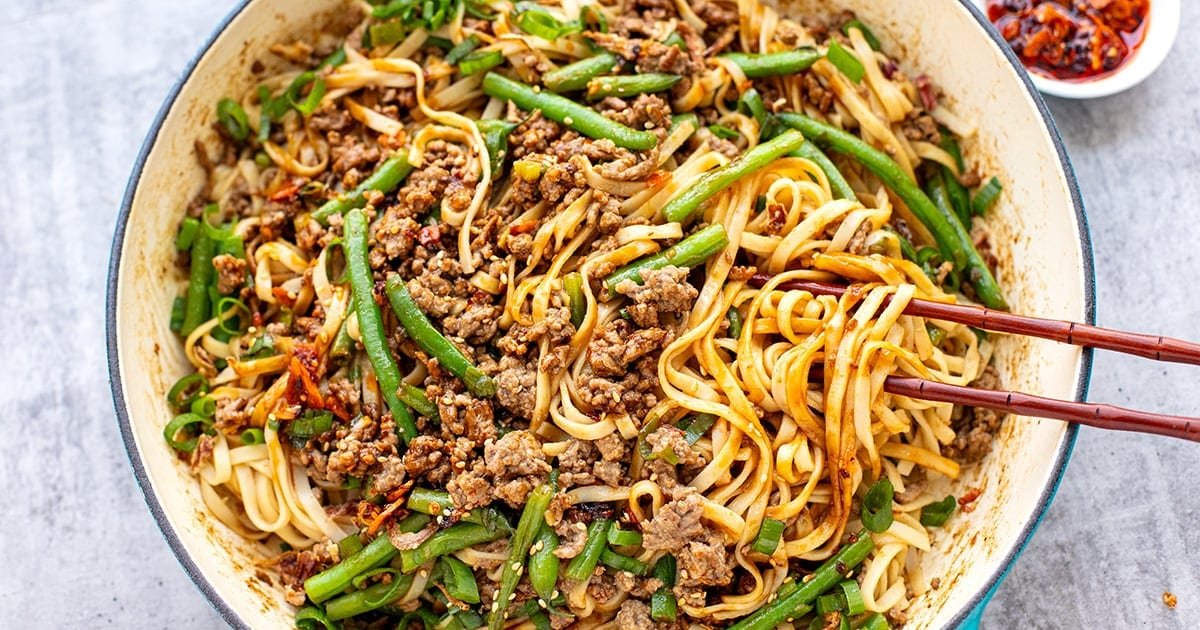
This Mongolian ground beef noodles recipe is sticky, saucy, and ready in 30 minutes — lean ground beef, crisp green beans, and thick egg noodles in a glossy garlic-ginger sauce. High in protein and better than takeout.
Jump to: ℹ️ Overview | 🛒 Ingredients | 📷 How To Make | 📹 Watch The Video | 👩🍳 Recipe Tips | 🥗 Serving Suggestions | 📝Full Recipe Card | 🍽 More Ground Beef Recipes
At A Glance
- ⏱ Ready In: 30 minutes (15 min prep, 20 min cooking)
- 🍽 Serves: 4-5
- 🌱 Diet: High-Protein, Dairy-Free, Nut-Free
- 💪 Nutrition Highlights: Over 30 grams protein per serving, made with lean ground beef
- 🥕 Main Ingredients: Lean ground beef, thick egg noodles, green beans, garlic, ginger, soy sauce, brown sugar, green onions
- 🔥 Flavor Profile: Savory-salty-sweet, garlicky and gingery, glossy sticky sauce with a hit of chili on top
- 🧊 Meal-Prep Friendly: Keeps well in the fridge for 3-4 days, though best fresh (noodles soften on reheating)
- Best Served With: A simple cucumber salad or steamed greens on the side, if you need extras.
This is my ground beef take on the Mongolian beef — same sticky, savory-sweet sauce, but built around lean ground beef instead of sliced steak, so it’s faster, cheaper, and a genuinely easy, high-protein weeknight dinner.
The sauce is where all the magic happens: garlic, ginger, soy sauce, and brown sugar reduce down into something glossy and clingy that coats every strand of noodle. I add green beans straight into the same pan, so you get a vegetable in without dirtying another dish.
My family asks for this in the regular dinner rotation now, and it reheats for lunch the next day just fine.
👩🍳 You might also like these recipes: Mongolian chicken (paleo-friendly), beef bulgogi bowl, shrimp lo mein, ground chicken stir fry, honey soy ground & rice bowls, or 45+ ground beef dinner ideas.
What You’ll Need
Here is what you’ll need for this Mongolian ground beef noodles recipe. Find the full measurements in the recipe card below.
- Lean ground beef (5% fat) — keeps this lighter than a traditional sliced-beef version while still delivering serious protein. Ground turkey or chicken work as a swap, though cooking time will shorten slightly.
- Garlic and fresh ginger — the aromatic backbone of the sauce. Don’t skip fresh ginger here; it makes a noticeable difference over the dried/powdered version.
- Green onions — whites/lighter greens go in with the aromatics for flavor, greens are saved for garnish and freshness.
- Peanut oil — adds a subtle nuttiness that suits the flavor profile, though any neutral oil works. I don’t love olive oil in this, but you can use it.
- Light soy sauce — the salty backbone of the sauce. If you want to bring the sodium down, a low-sodium soy sauce swaps in easily without losing flavor.
- Brown sugar — balances the salt and gives the sauce its signature sticky-glossy finish. Unlike white sugar, brown sugar gives you that more caramelized sweetness.
- Oyster sauce — adds depth and umami. Swap for a vegetarian “oyster” sauce or hoisin if needed.
- Sesame oil — a finishing touch for aroma, added at the end rather than for cooking.
- Cornstarch (or flour) — thickens the sauce so it clings to the noodles instead of pooling at the bottom of the bowl. I have used both cornstarch and flour in the past, both work well.
- Thick egg noodles — hold up well to the sauce and give a satisfying chew. Regular lo mein, udon, rice noodles or even spaghetti work in a pinch.
- Green beans — adds crunch, color, and fiber without an extra pan to wash. Feel free to swap with broccoli, bok choy, or shredded cabbage.
- Sesame seeds and chili oil/crisp — for serving; the chili crisp adds a nice textured heat if you like things spicy.
How To Make Mongolian Ground Beef Noodles
Find the full recipe and nutritional information below. Here are some handy step-by-step photos for how to make Mongolian ground beef noodles.
- Prepare all other ingredients.
- Cook the noodles according to packet instructions, but slightly under — you want them just al dente since they’ll cook a touch more once tossed in the sauce. Drain and rinse under cold water to stop the cooking. If prepping ahead, toss with a drizzle of oil to prevent sticking.
- Whisk together the soy sauce, brown sugar, water, oyster sauce, and sesame oil (this can be done ahead of time).
- Heat a large skillet or wok over medium-high heat with a little oil. Add the ground beef, breaking it up as it cooks, for 4-5 minutes until no longer pink.
- Add the green beans directly into the pan with the beef and stir through. Cook for another 2 minutes as the juices reduce.
- Push the beef and beans to the side of the pan. Add a touch more oil along with the garlic, ginger, and green onion whites. Stir-fry for 30 seconds until fragrant.
- Pour the sauce into the pan and bring to a simmer for 2-3 minutes, letting the sugar dissolve and the flavors meld.
- Make a slurry with the cornstarch (or flour) and water, then pour it gradually into the pan, stirring until the sauce thickens and coats everything (about 1 minute). If it looks too dry, loosen with a splash more water.
- Add the cooked noodles directly into the pan and toss well to coat everything in the sauce.
- Top with green onion greens, sesame seeds, and a drizzle of chili oil or chili crisp. Serve hot.
Watch The Video
Recipe Tips
- Don’t overcook the noodles in step one — they’ll finish cooking once tossed with the hot sauce, so slightly underdone is exactly right.
- Use lean beef (5% fat) to keep this lighter without sacrificing protein — the sauce still delivers plenty of richness so you won’t miss the extra fat.
- Swap the noodles if needed — lo mein, udon, or even spaghetti all work well if thick egg noodles aren’t available.
- Add more veg if you like — broccoli, snap peas, or shredded carrots would all work well added alongside the green beans.
- Lower the sodium by using a low-sodium soy sauce and cutting the oyster sauce slightly — this brings the sodium down noticeably without touching the flavor balance.
- Storage: Keeps in an airtight container in the fridge for 3-4 days. Reheat gently in a pan or microwave with a splash of water to loosen the sauce.
- Freezing: Not recommended once assembled, as the noodles go soft and mushy on thawing. If you want to prep ahead, freeze the cooked beef and sauce separately and cook fresh noodles when ready to serve.
Serving Suggestions
This is a complete meal on its own, but a simple cucumber salad or some steamed bok choy on the side rounds it out nicely and adds a fresh, crunchy contrast to the sticky noodles. If you’re feeding a bigger crowd or want to stretch it further, serve alongside steamed rice or a light egg drop soup.
💬 If you’ve tried this Mongolian ground beef noodles or any other recipe on the blog then don’t forget to rate the recipe and let me know how you got on in the comments below, I love hearing from you! You can also FOLLOW ME on Instagram, Facebook, Pinterest, YouTube, and or sign up to my Newsletter to see more of my delicious food.
Want to Save This Recipe?
Enter your email & I’ll send it to your inbox. Plus, get great new recipes from me every week!
By submitting this form, you consent to receive emails from Cooked & Loved
Sticky, saucy Mongolian ground beef noodles made with lean beef, green beans, and thick egg noodles in a glossy garlic-ginger sauce — ready in just 30 minutes. Find step-by-step photos and more recipe tips above.
-
Cook the noodles according to packet instructions, but not quite all the way — you want them just al dente, as they’ll finish cooking once stirred through the sauce. Drain and rinse under cold water to stop the cooking. If prepping ahead, toss with a small drizzle of oil to stop sticking. Set aside.
-
Heat a large skillet or wok over medium-high heat with about 2 teaspoons of oil. Add the ground beef, breaking it up, and cook 4-5 minutes until no longer pink.
-
Add the green beans and stir through. Cook another 2 minutes as the juices from the beef start to evaporate.
-
Push the beef and green beans to the side of the pan. Add the remaining 1 teaspoon oil, garlic, ginger, and green onion whites. Stir-fry 30 seconds until fragrant.
-
In a jug, whisk together the soy sauce, brown sugar, water, oyster sauce, and sesame oil (this can be prepped ahead). Pour into the pan.
-
Bring to a simmer and cook 2-3 minutes to let the sugar dissolve and the flavors meld.
-
Mix the cornstarch (or flour) with 2 tablespoons of water to make a slurry. Pour gradually into the pan, stirring until the sauce thickens and coats the beef (about 1 minute). If it looks too dry, loosen with a splash more water.
-
Add the cooked noodles directly to the pan and toss to coat everything in sauce.
-
Top with green onion greens and sesame seeds. Serve hot with chili crisp or chili oil.
Key Recipe Tips: Don’t overcook noodles in step 1; push beef aside rather than removing it when cooking the aromatics; loosen the sauce with a splash of water if it looks too thick or dry.
Storage Tips: Keeps in the fridge for 3-4 days in an airtight container. Reheat gently with a splash of water to loosen the sauce.
Make-Ahead Tips: The sauce can be whisked together up to a day ahead and stored in the fridge. For best texture, cook the noodles fresh rather than storing them pre-assembled.
FAQs:
Is this recipe gluten-free? Not as written, since both soy sauce and egg noodles typically contain gluten. Swap in gluten-free tamari and rice noodles to make it fully gluten-free.
Can I use a different protein? Yes — ground turkey or chicken both work well; just reduce the cooking time slightly since they cook faster than beef.
What’s the best noodle to use if I can’t find thick egg noodles? Lo mein, udon, or even spaghetti all work as substitutes.
Can I make this ahead for meal prep? The sauce keeps well made ahead, but for the best texture, cook noodles fresh close to serving time rather than storing the dish fully assembled.
Calories: 540kcal |