
Table of Contents
Walnuts have become increasingly important following the latest Dietary Guidelines for Americans, which highlight whole foods as essential for a healthy diet. Notably, walnuts are featured on the inverted guideline pyramid, showcasing their significance as a nutritious food with no added ingredients or extensive processing.
California walnuts: A Nutrient-Dense Ingredient
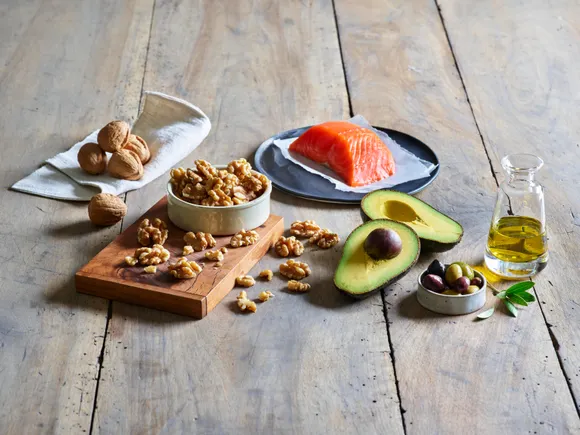
Walnuts align with the key priorities outlined in the Dietary Guidelines for Americans, emphasizing the importance of healthy fats and nutrient-dense protein sources. Their natural fat composition makes them a valuable addition to products aiming to enhance overall dietary quality.
A one-ounce serving of walnuts provides 18 grams of total fat, including 2.5 grams of monounsaturated fat, 13 grams of polyunsaturated fat (with 2.5 grams of plant-based omega-3 ALA), along with 1.5 grams of saturated fat and 4 grams of protein.
Supporting Nutrition Throughout Life
Meeting nutritional requirements across all life stages is crucial, and California walnuts can contribute to this goal. Research and recommendations found in the Guidelines suggest that nut butters, such as walnut butter, can aid in introducing allergenic foods from around six months of age. Walnuts’ versatility allows brands to incorporate them in various product categories.
A Foundation of Scientific Research
Decades of peer-reviewed studies support the role of California walnuts in overall health. Research since 1993 has explored the impact of walnuts on heart health, brain health, gut health, and weight management. This body of research confirms walnuts as a valuable component of a balanced diet focused on whole, nutrient-rich foods.
For brands, this scientific backing provides assurance that walnuts are a proven and research-supported ingredient for health-conscious formulations.
Feel empowered to innovate with confidence. Reach out to [email protected] to discuss how our innovation team can support your next product development with walnuts.
References
- Eating 1.5 ounces of walnuts daily, as part of a low saturated fat and low cholesterol diet, may reduce the risk of coronary heart disease. (FDA) One ounce of walnuts provides 18g of total fat, 2.5g of monounsaturated fat, 13g of polyunsaturated fat including 2.5g of alpha-linolenic acid – the plant-based omega-3
- Lauren E Theodore, Nicole J Kellow, Emily A McNeil, Evangeline O Close, Eliza G Coad, Barbara R Cardoso, Nut Consumption for Cognitive Performance: A Systematic Review, Advances in Nutrition, 2020; https://doi.org/10.1093/advances/nmaa153
- Mandalari G, Gervasi T, Rosenberg DW, Lapsley KG, Baer DJ. Effect of nuts on gastrointestinal health. Nutrients. 2023;15(7):1733.
- Rock CL, Flatt SW, and Barkai HS. Walnut consumption in a weight reduction intervention: effects on body weight, biological measures, blood pressure and satiety. Nutr J. 2017;16(76). doi: 10.1186/s12937-017-0304-z