
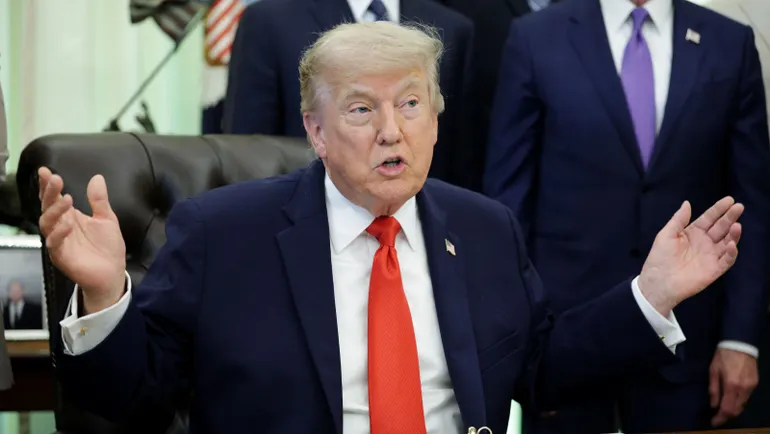
President Trump Takes Aim at Meat Processing Monopoly
In a recent social media post, President Donald Trump announced plans to take legal action to allow farmers and ranchers to process their own food, aiming to break the stronghold of the four largest meat processors. These companies, which include JBS, Cargill, Tyson Foods, and National Beef, currently control 85% of beef processing in the United States.
The Trump administration has been pushing for lower beef prices amidst a period of high food costs. To address this issue, the White House has been pressuring grocers to reduce prices and has initiated an antitrust investigation into major meat producers. Additionally, Trump recently lifted a ban on Mexican cattle imports to increase the supply of livestock for processing in the U.S.
Both Republicans and Democrats have proposed legislation and investigations to promote competition in the meat industry, with the goal of lowering prices for consumers. Agriculture Secretary Brooke Rollins hinted at upcoming announcements to expand ranchers’ ability to sell across state lines and combat consolidation in the industry.
While the Biden administration has also taken steps to support small processors and increase market opportunities, some of these efforts have faced challenges, including frozen grant funds and canceled initiatives under the previous administration.
Despite the administration’s intentions to boost competition and lower prices, agriculture groups have expressed concerns about allowing farmers and ranchers to process their own food. The National Cattlemen’s Beef Association warned that weakening federal meat inspection and safety standards could jeopardize confidence in the U.S. meat supply and create uncertainty for producers.
In response to criticism, the organization emphasized the importance of letting the market dictate the cattle business, rather than relying on government intervention. The debate over how to best address the meat processing monopoly continues, with stakeholders advocating for a balance between competition and food safety.