
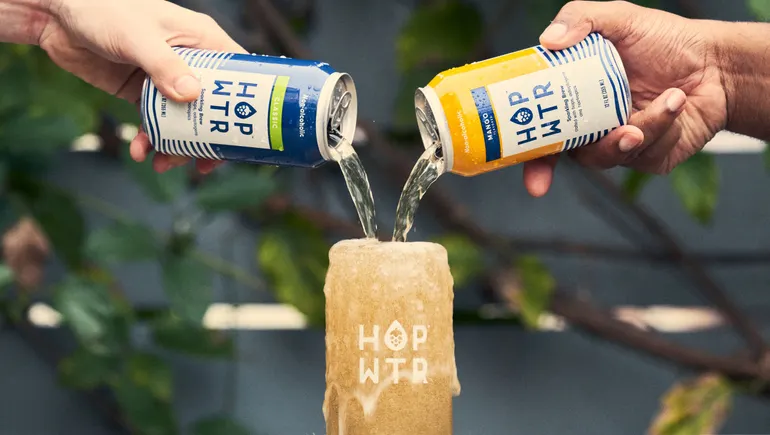
With the rise of the nonalcoholic beer category, hop water has carved out its own niche. Often referred to as the “LaCroix of beer,” hop water is a sparkling water infused with hops, offering a unique flavor profile without the alcohol content. Introduced in 2014 by home brewer Paul Tecker, hop water was one of the early players in the nonalcoholic beer space that gained popularity in recent years.
Despite being a pioneer in the nonalcoholic sector, hop water has faced challenges in gaining widespread acceptance. While the overall nonalcoholic category is booming with sales reaching $1 billion, hop water accounts for a small percentage of this market. Sales of nonalcoholic beer have seen significant growth, while hop water has experienced a decline.
However, there is still hope for hop water as consumers gravitate towards better-for-you beverages with functional benefits. With no calories, carbs, sugar, or gluten, hop water appeals to health-conscious individuals looking for a refreshing alternative.
As the beverage industry evolves, hop water makers are exploring new avenues to attract consumers beyond the traditional nonalcoholic beer market. By focusing on health and wellness attributes, brands like Sierra Nevada are expanding their reach into natural grocery stores and wellness-focused spaces.
Looking ahead, hop water brands are innovating with new flavors and ingredients to engage both beer enthusiasts and wellness seekers. By introducing unique blends like iced tea and lemonade or seasonal offerings like spiced apple, hop water is reinventing itself in a competitive market.
With a focus on flavor innovation and functional benefits, hop water is poised for a resurgence in the beverage industry. By adapting to changing consumer preferences and leveraging its unique positioning, hop water has the potential to carve out a larger share of the nonalcoholic market.