
Table of Contents
The demand for sour foods and beverages is on the rise across all types of retailers, with c-stores yet to fully take advantage of this trend, as per experts.
Sour is a well-established flavor trend that continues to evolve, as highlighted by 7-Eleven Inc.
According to the retailer, “Consumer interest in sour candy remains strong, driven by shoppers looking for bold flavor experiences, sensory excitement, and products that offer a surprise element.”
Although sour is considered a mature trend, Sally Lyons Wyatt, global executive vice president and chief advisor for consumer goods and foodservice insights at Circana, mentions that it still has pockets of growth and reinvention across various categories, including energy drinks.
Data from Circana shows that sour food and beverage sales have increased by 10.8% in terms of dollars and 6.9% in units for the 52 weeks ending Aug. 9.
Within c-stores, sour product dollar sales saw a 5.5% increase, with units growing by 1.5%. Nonchocolate candy remains the leading category in sour sales for c-stores, accounting for approximately 64% of dollar sales, followed by energy drinks.
“Sour is a significant aspect of the c-store story due to immediate consumption,” emphasized Lyons Wyatt.
Top sour variants gaining traction
Despite the increasing popularity of sour flavors, some products and flavor variations struggle to incorporate it successfully, according to Lyons Wyatt. While certain sour gummy products have seen declines in c-stores, newer and more distinct selections like sour black cherry are performing well.
One of the fastest-growing c-store flavors is sour blue raspberry, which surged by 33% in the past year based on Circana data.
Lemonade is a common sour option, with Wawa’s Shark Splash Lemonade using tart cherry syrup as an ingredient, noted Emily Murawski, a research and insights manager at Datassential.
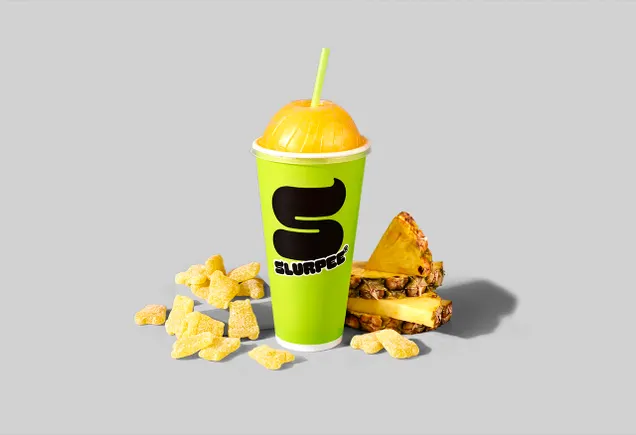
As consumers become more adventurous, sour options provide c-stores with a versatile way to add a surprising twist to familiar products through new flavor combinations, textures, and formats, as mentioned by 7-Eleven.
Lyons Wyatt also highlighted the role of sour flavors in innovation and experimentation as a crucial avenue for c-stores.
The ideal sour assortment
Sally Lyons Wyatt, global executive vice president and chief advisor for consumer goods and foodservice insights at Circana, recommends structuring a sour assortment around three roles:
Core: Maintain popular sour candy formats and recognizable profiles such as assorted sour fruit, sour-then-sweet, watermelon, and blue raspberry.
Growth: Highlight emerging winners like black cherry, intense sour, and crossover energy-drink flavors.
Discovery: Allocate a portion of the assortment for limited editions, spicy-sour, chamoy, pickle, tropical, and cross-category innovations.
Revitalizing sour sales
Although sour is a mature flavor, there is ample room for reimagination and innovation, as noted by Murawski.
In desserts and nonalcoholic beverages, c-stores can leverage emerging flavors such as those found in a margarita, which can be incorporated into pies, cookies, cupcakes, ice cream, shakes, and donuts, according to Murawski.
Key lime is also identified as a potential top-seller.
“Sour item-as-flavor trends are excellent choices for c-stores as they offer a familiar item in an unexpected format,” Murawski added.
Operators can introduce sour candy flavors into beverages and create connections between candy and beverages through shared flavor families like black cherry and blue raspberry, suggested Lyons Wyatt.
Lyons Wyatt also recommended embracing hybrid or layered flavors that resonate with consumers, such as combinations of sour and spicy.
Moreover, sour flavors like dill pickle are starting to make their way into the salty snacks category, a rapidly growing segment in c-stores, according to Lyons Wyatt.
Additionally, c-stores have the advantage of cross-category experimentation due to their smaller footprint and diverse candy and beverage assortment, noted Lyons Wyatt.
Merchandising plays a crucial role in making these connections visible, with suggestions like placing complementary candy and beverage flavors together in secondary displays or using clear signage to highlight different flavor profiles, Lyons Wyatt recommended.
For sour energy drinks, strategic placement in the cold vault combined with pairing them with candy at high-traffic points can encourage additional purchases, Lyons Wyatt advised.
There is a high potential for further expansion in the sour category, with Datassential Menucast predicting it to outperform 85% of other foods, beverages, and ingredients in terms of future growth over the next four years.