
Table of Contents
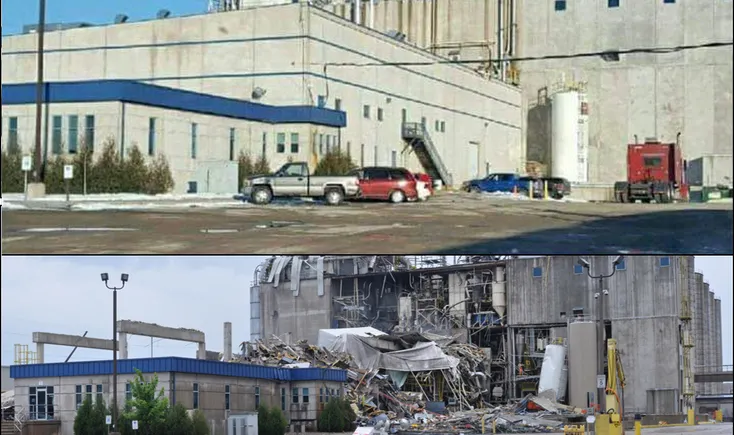
On the evening of May 31, 2017, as the sun dipped below the horizon in Cambria, Wisconsin, little did anyone at Didion Milling’s corn processing facility know the tragic events that would soon unfold. Within hours, a series of powerful explosions rocked the facility, claiming the lives of five individuals, injuring fourteen others, and leaving the plant in ruins. This devastating incident serves as a stark reminder of the critical importance of effective industrial dust management in grain processing facilities.
Understanding the Environment
Many people may not be aware that grain processing facilities operate in a Class II, Division 1 (CIID1) environment, which is the highest risk category for combustible dust hazards. Unlike other industrial settings where dust levels may only occasionally reach dangerous levels, these facilities maintain explosive dust concentrations as a norm during their regular operations. This constant presence of combustible dust presents unique challenges that conventional dust control methods struggle to address.
The Anatomy of a Disaster
The tragedy began with a small fire in a corn-grinding machine, a hazard commonly encountered in grain processing. However, what escalated this routine incident into a catastrophic event was the chain of failures that ensued. The initial explosion triggered a series of subsequent blasts, fueled by the accumulated grain dust spread throughout the facility.
Traditional Methods Fall Short
Conventional dust management techniques such as periodic cleaning, basic ventilation systems, and standard dust collection are insufficient in CIID1 environments. These methods often focus on visible accumulation of dust while neglecting the continuous generation of explosive dust concentrations. At Didion, the facility’s cleaning program prioritized food safety standards over the specialized requirements of high-risk dust environments.
A Preventable Tragedy
Investigations revealed that inadequate dust management significantly contributed to the severity of the disaster. The facility’s cleaning program primarily emphasized food safety standards rather than industrial safety, a common oversight in food processing operations.
Modern Solutions, Ancient Problems
While grain dust explosions have plagued the industry for centuries, modern technology offers new approaches to tackle this age-old challenge. Advanced dust control systems, specifically designed for CIID1 environments, can provide continuous protection through specialized air barriers and automated monitoring. These systems must adhere to stringent safety standards, with every component engineered to prevent potential ignition sources.
Industry data highlights the urgency of the situation: in the past five decades, U.S. grain handling facilities have experienced over 500 explosions, resulting in 180 fatalities. In 2023 alone, seventeen grain dust explosions occurred nationwide.
Changing the Approach
To prevent future tragedies, a shift from reactive to proactive dust management is imperative. Modern facilities are adopting comprehensive strategies that encompass various preventive measures.
The Economic Imperative
While enhancing safety necessitates investment, the costs are minor compared to the potential losses. Apart from the immeasurable human toll, the destruction of facilities and production downtimes make prevention the economically prudent choice.
Looking Forward
The future of the grain industry hinges on recognizing and addressing the unique challenges posed by CIID1 environments. As facilities handle larger material volumes, the risks of dust-related incidents increase proportionally. Nevertheless, the technology and expertise required to avert such tragedies are available today.
The Didion disaster acts as a wake-up call for the industry. By implementing comprehensive dust management strategies tailored to high-risk environments, facilities can safeguard their employees while ensuring smooth operations. The next major dust explosion is not inevitable—it is preventable.