
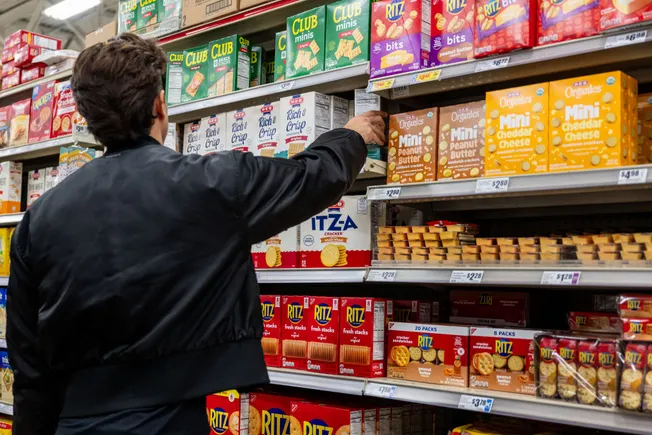
Food manufacturers in the U.S. are cautioning about a prolonged period of reduced spending due to inflation and ongoing global uncertainty, which is leading budget-conscious grocery shoppers to cut back on buying cereal, chips, and cookies.
Despite efforts in innovation, marketing, and packaging changes, consumers seem to have reached their limit after years of price hikes driven by inflation. The return to the food category that many executives anticipated has not materialized.
“I am concerned about the U.S. consumer,” said Dirk Van de Put, CEO of Mondelēz International. “I don’t foresee any changes unless the disposable income of consumers increases significantly or costs decrease substantially.”
General Mills, the maker of Cheerios, also expressed a pessimistic outlook, projecting a 1.5% to 2.5% decline in sales for the 2026 fiscal year, marking its third consecutive year of sales drop.
While food-at-home prices are expected to increase by 1.7% in 2026, a slight improvement from the previous year, the rise is a relief from the peak during the COVID-19 pandemic, where food prices surged by 11.4% in 2022.
With prices still on the rise, consumers are turning to promotions, cheaper alternatives, or reducing their purchases. This trend is likely to continue in the short term, with consumers facing tough economic conditions for possibly the next three years.
Conagra Brands CEO Sean Connolly highlighted the impact of inflation on the business, noting a strategic decision to hold off on further price increases to avoid straining consumers who were already at their limit.
Mondelēz has seen some resilience in its business due to a lower reliance on the U.S. market and consumers’ continued interest in snacking. The company expects organic net revenue growth of flat to 2% in 2026.
Despite an increase in biscuit purchases, driven by brands like Oreo and Ritz, the reduced disposable income has led to a decline in both the frequency and quantity of purchases. The CEO of Mondelēz emphasized the need for consumers to regain confidence in spending.
The evolving concept of value
Recent forecasts from Circana indicate a lower growth rate for retail food and beverage sales in 2026, reflecting a shift in consumer behavior towards seeking value amid intense price competition.
Food companies are responding by reevaluating their value propositions, with some choosing to lower prices. General Mills and PepsiCo have initiated price cuts on various products, while also streamlining their product offerings to focus on high-demand items.
General Mills CEO Jeff Harmening emphasized the importance of value for middle and lower-income consumers, attributing the shift in spending patterns to cost of living pressures.
While value for consumers encompasses affordability, there is also a willingness to pay more for products with specific nutritional benefits or unique experiences.
Conagra has prioritized volume growth and product innovation to appeal to consumers seeking value amidst inflation. The company has launched new protein-rich products and expanded its product lines to cater to changing consumer preferences.
Despite the challenges posed by inflation, Conagra’s sales data indicate resilience in the frozen and snack foods segment, with a forecast of organic net sales change ranging from -1% to +1% compared to the previous fiscal year.
Conagra’s senior vice president of demand science emphasized the need for food products to offer excitement and value beyond just price reductions to engage consumers, particularly the younger generation.