
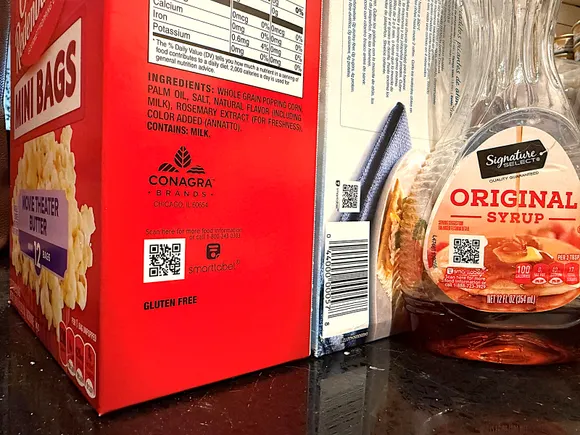
Grocers may recognize SmartLabel as a product-labeling initiative that offers consumers access to a product’s ingredients, nutrition information, and more through a QR code scan, saving valuable space on packaging. The initiative is now looking to broaden its applications in preparation for a significant point-of-sale project.
Launched in 2015, SmartLabel allows customers to scan a QR code to retrieve product data from over 106,000 participating products across more than 1,000 brands, as stated by Rishi Banerjee, senior director of the SmartLabel initiative at the Consumer Brands Association.
“Consumers are increasingly interested in learning more about the products they purchase and use daily, and the industry has responded to that demand,” Banerjee explained.
SmartLabel not only provides information on ingredients, allergens, recall notices, brand history, and sustainability efforts but also offers detailed ingredient definitions sourced directly from brands, according to Banerjee.
“We receive approximately 22 million interactions with consumers each year, and the average time spent by a consumer on a SmartLabel page post-scan is over 90 seconds, surpassing the duration of most TikTok videos,” Banerjee revealed.
Expanding use cases
SmartLabel envisions a significant opportunity to incorporate its QR codes as a fundamental component for consumers through an initiative spearheaded by GS1, the organization responsible for establishing and upholding supply chain standards. This initiative aims to transition retailers from solely utilizing UPC barcodes for point-of-sale transactions to accepting 2D barcodes, such as QR codes, by the end of the upcoming year. Referred to as Sunrise 2027, the project aims to promote widespread adoption of web-enabled barcodes, which can be scanned by smartphones and point-of-sale scanners, enabling consumers to access product information while assisting retailers in managing sales, identifying recalled items, and automatically discounting products nearing their expiration date.
Banerjee added, “Retailers will need to update the QR code with the enabled GS1 digital link. However, the consumer-facing aspect of the QR code will remain powered by SmartLabel, providing a consistent user experience across all participating brands.”
GS1 highlighted that 2D barcodes offer enhanced product transparency, traceability, and authentication compared to traditional zebra-striped barcodes.
While the implementation of this initiative is still a bit under two years away, Banerjee, who has a background at Amazon, the American Frozen Food Institute, and the USDA, noted that retailers will likely require time to prepare for the transition.
“Brands already utilizing SmartLabel and dedicating label space to the initiative are significantly ahead in the process,” Banerjee emphasized.
Sunrise 2027 isn’t the sole initiative where Banerjee envisions broader adoption of QR codes on products. SmartLabel is also exploring further applications for retailers and brands as several states advocate for state-level labeling and ingredient disclosures, including warnings for products containing food additives.
“This presents a significant opportunity for digital disclosure, allowing additional information to be shared via QR codes,” Banerjee highlighted.
SmartLabel is also enthusiastic about extended producer responsibility legislation being introduced nationwide, which would hold brands and producers accountable for their products’ end-of-life management. Banerjee mentioned that several brands are piloting with SmartLabel to offer recycling information at the ZIP code level to consumers.
“For consumers, determining recyclable items is often challenging, not just in their local area but also when they are on the move,” Banerjee remarked. “Providing detailed recycling information through QR codes can enhance consumer confidence and increase participation in recycling efforts.”
SmartLabel is committed to meeting the evolving needs of retailers, CPGs, and consumers amidst regulatory changes and the barcode initiative, while also streamlining data management.
“Transparency is our ultimate goal, and a critical aspect of that is standardizing all this data,” Banerjee stressed. “With such vast amounts of product data, if 1,000 brands approached this in 1,000 different ways, it would not result in a positive consumer experience.”