
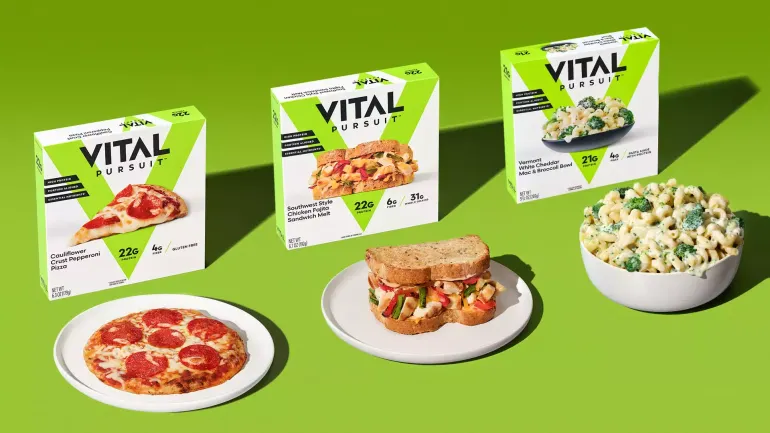
Food companies are adapting their products to cater to the increasing use of GLP-1 drugs for weight loss. Executives are recognizing the long-term impact these medications will have on sales.
About one in eight adults report taking GLP-1s like Ozempic and Wegovy for weight loss or other chronic conditions, according to a KFF poll. Over half of U.S. adults – around 137 million people – are eligible to use these medications, and usage is projected to increase as the drugs become more affordable and more accessible.
For food companies, these medications pose a potential threat: consumers on weight loss drugs not only eat less but also tend to avoid processed foods and snacks. A Cornell study found that grocery spending decreased by 6% in households where at least one person is taking weight loss drugs.
“Anti-obesity drugs will significantly impact the food market,” stated General Mills CEO Jeff Harmening during the Consumer Analyst Group of New York Conference in Orlando.
General Mills and other food industry leaders are reformulating or introducing new products tailored to these consumers, offering smaller portion sizes or incorporating ingredients such as protein and fiber. Since GLP-1s reduce appetite, it is crucial for consumers on these medications to maximize their nutrient intake and ensure muscle mass and overall health are supported.
The weight-loss drugs are prompting consumers to opt for smaller portions and nutrient-dense protein and fiber-rich foods,” Harmening explained. General Mills is responding with smaller packaging sizes and new products like Honey Nut Cheerios Protein, Ghost performance nutrition bars, and new lines of granola.
Indulgence remains a top priority
Households with GLP-1 medication users for weight loss are projected to contribute to more than a third of food and beverage sales in the next five years, potentially reshaping consumer preferences and buying habits, according to a Circana report released in November.
Other food companies are also actively positioning themselves for a world influenced by GLP-1 drugs.
Nestlé introduced its first major U.S. brand in almost three decades in 2024, named Vital Pursuit, targeting consumers using GLP-1 medications and those focusing on weight management. Danone followed suit by launching an Oikos yogurt drink designed for GLP-1 drug users to help build and maintain muscle mass.
However, there are concerns among food companies about the longevity of GLP-1 medications compared to other diet trends like Atkins or South Beach, as noted by Erin Lash, senior director of consumer equity research at Morningstar. Additionally, the duration of GLP-1 usage remains uncertain, with a study revealing that 50% to 75% of individuals discontinue the medications within a year.A study found that 50% to 75% of people who start taking these medications stop using them within a year.
“Most [food companies] don’t seem overly concerned at this point” about GLP-1 drugs, Lash stated. “Consumers are still enjoying indulgent foods.”
Nevertheless, Lash advises preparing for a landscape where GLP-1s are a permanent fixture, while ensuring that the core consumer base who do not take these medications is not alienated.
Frozen and snack food company Conagra Brands, which has introduced a “GLP-1 friendly\” label to some of its Healthy Choice frozen meals, views the medications as an opportunity, even if consumers discontinue usage.
Bob Nolan, Conagra’s senior vice president of demand science, believes that attracting consumers while they are on GLP-1 medications can lead to continued patronage even after they stop taking the drugs.
Conagra offers portion-controlled frozen meals, vegetable options, and protein-rich meat snacks like Fatty and Slim Jim to cater to the GLP-1 and weight management demographic. They have also launched products such as Birds Eye vegetable sides and Banquet Mega XL Buffalo-Style Chicken Mac ‘N Cheese with added protein.
“We aim to provide products for consumers on GLP-1s,” Nolan explained. “And once you reach your target weight, what’s next? Maintenance is key.”
Despite projections of significant growth in the drug market, particularly with the introduction of oral forms, some executives remain cautious.
Dirk Van de Put, CEO of Mondelēz International, the company behind Oreo, believes that GLP-1s will have a limited impact on their volumes. Even with oral medications on the horizon, he does not foresee a substantial shift in their business.
Consumers are already gravitating towards protein and fiber for health benefits, benefiting products like Clif and Builders protein bars within Mondelēz’s portfolio.
“While there will be an impact on our business, it won’t solely be due to GLP-1,” Van de Put concluded.